
Category: Farm Insights / Research Updates
Inside Our Greenhouses: What the Soil Is Telling Us
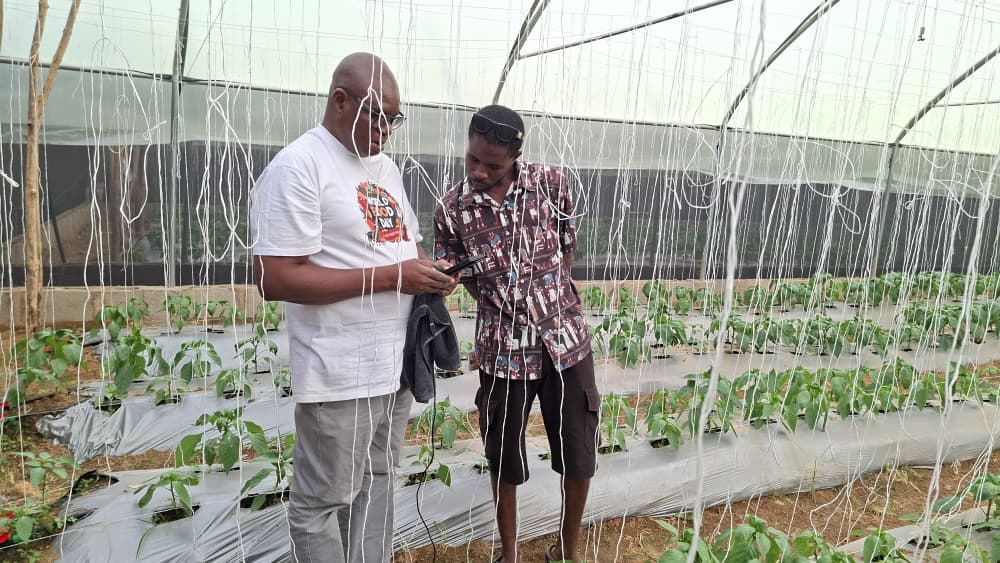
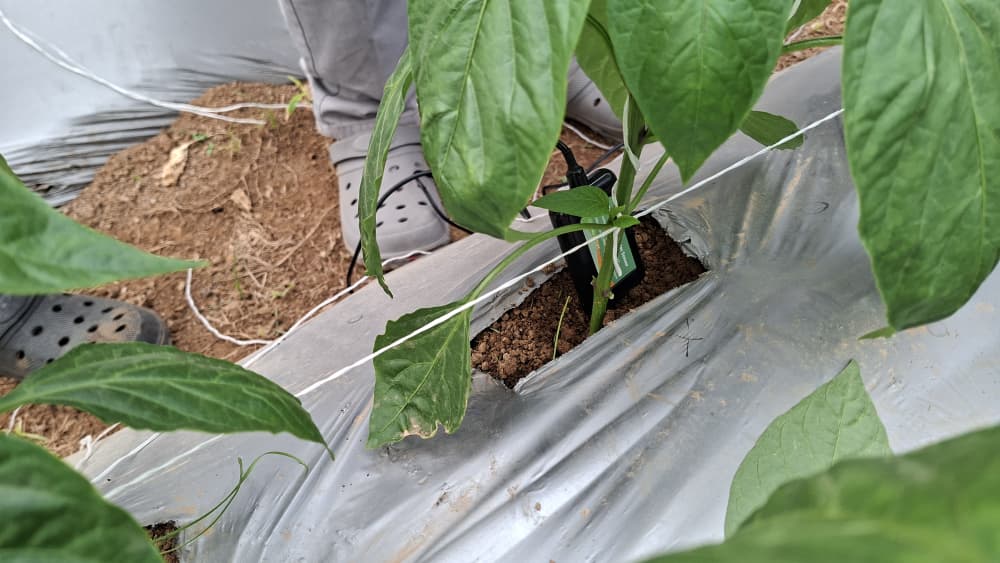
A field soil analysis conducted across all six greenhouse units at Indices Agro Farms has yielded important insights into soil health, fertility distribution, and the quality of growing conditions underpinning our production systems.
At Indices Agro Farms, precision is not a buzzword. It is the foundation of how we grow. On 7 April 2026, our farm research team conducted a comprehensive soil and electrical conductivity (EC) analysis across all six greenhouse facilities, sampling 24 plots and measuring eight key soil parameters: temperature, moisture, EC, salinity, nitrogen, phosphorus, potassium, and pH.
The results offer a detailed snapshot of where our soils stand and what targeted actions are needed to optimise growing conditions ahead of the next cycle.
Stable Temperature and pH: A Solid Baseline
Inside our greenhouses: what the soil is telling us
A field soil analysis conducted across all six greenhouse units on 7 April 2026 has yielded important insights into soil health, fertility distribution, and growing conditions. Our team sampled 24 plots and measured eight key parameters including EC, salinity, and macronutrient levels.
Mean EC
231.7 μS/cm
Plots non-saline
62.5 %
pH range
7.03 – 7.30
Greenhouse 6 recorded the highest average EC and macronutrient concentrations. Plot GH 6_2 returned a very high EC reading of 866 μS/cm, warranting targeted leaching before the next growing cycle.
Read full article on our blog →One of the most encouraging findings is the consistency of our greenhouse temperatures and soil pH levels. Temperatures across all plots held steady within a narrow range, with a coefficient of variation of just 3.1%, confirming that our controlled environment infrastructure is performing as designed.
Soil pH readings across all 24 plots fell within the neutral range of 7.03 to 7.30, which is broadly optimal for the crops we grow. No liming or acidification treatment is required at this time. This stability reflects well on our greenhouse management practices and provides a reliable chemical baseline for nutrient uptake.
Electrical Conductivity: High Variation Demands Precision Management
EC is one of the most important indicators of soil ionic strength and, by extension, overall fertility and potential salt stress. Our analysis found significant variation in EC levels across the greenhouses, ranging from a low of 34 μS/cm to a high of 866 μS/cm.
Using internationally recognised thresholds from the Food and Agriculture Organization (FAO), 62.5% of sampled plots fall in the non-saline category, posing no risk to crops. However, five plots (20.8%) recorded high EC levels, and one plot, GH 6_2, returned a very high reading of 866 μS/cm. This level of ionic concentration can impair water uptake in sensitive plant species and warrants immediate attention through targeted leaching and retesting.
Greenhouse 6 recorded the highest average EC and macronutrient levels of all six units, suggesting either recent heavy fertilisation or salt accumulation from irrigation. Greenhouse 1, by contrast, showed the lowest nutrient concentrations across all parameters, indicating a potential need for targeted fertilisation input.
Nutrients Are Unevenly Distributed Across Plots
Nitrogen, phosphorus, and potassium levels tracked almost perfectly with EC readings across the dataset, a finding confirmed by a Pearson correlation of above 0.99 between these parameters. In practical terms, this means that where EC is high, nutrient concentrations are high, and where it is low, the soil is relatively depleted.
This spatial pattern points to uneven fertiliser application across plots. Rather than blanket nutrient management, our findings support a shift toward plot-level nutrient mapping and precision application, ensuring that input is calibrated to actual soil conditions rather than applied uniformly.
Moisture Variability Points to Irrigation Scheduling Gaps
Soil moisture content ranged from 20.4% to 51.5% across the sampled plots, with GH 5 recording the driest conditions. While temperature stability is a strength, moisture variability of this magnitude suggests inconsistencies in irrigation distribution that need to be addressed. Revised irrigation scheduling, especially for drier plot clusters in GH 5, is a near-term operational priority.
What Comes Next
Based on the findings of this analysis, our farm team is implementing the following targeted actions:
- Leaching and retesting of GH 6_2 and GH 3_1 ahead of the next growing cycle
- A plot-level fertilisation review for GH 1 and other nutrient-deficient plots
- An irrigation scheduling audit for GH 5
- Standardisation of soil probe protocols to improve data quality and consistency in future measurement rounds
We also plan to increase the number of sampling points per greenhouse in subsequent analyses, which will improve the statistical precision of between-greenhouse comparisons.
Precision Farming, Every Cycle
This analysis is part of our broader commitment to evidence-based farm management. At Indices Agro Farms, every growing cycle is an opportunity to learn, refine, and improve. By investing in soil health data, we ensure that the crops we produce are grown in conditions that are not only controlled but continuously optimised.
For enquiries about our greenhouse systems, training programmes, or research partnerships, visit enterprise.dajrhas.com or contact us directly.
Analysis conducted by the Farm Research Team, John Bawa | 7 April 2026